Thursday, August 28

Life, man...whew!

Well, it seems as though I haven't been a very good blogger this summer. It's not that there's not a lot to say, it's just that I've been too exhausted to come up with creative ways of saying it.

Let's see...I'm finally a real nurse...passed the boards, registered with the state of Michigan, blah, blah, blah. It's starting to sink in about how much responsibility I have, and it's making me wonder if I was in my right mind with I signed on for this. But I'm muddling through. Hopefully I can get a year or so of experience in and find a job that's more suited to my interests. Right now I work on an LTACH (long-term acute care) unit. I'm seeing a good variety of patients and learning a lot, but it's a pretty draining population to be dealing with. My people are often frustrated because they're in the hospital because of something that went wrong at another hospital, or they've been hospitalized for months. Most of them die or go to long-term care. I'd rather work in an outpatient cosmetic surgery center...give people boob jobs and make them happy! But I can't complain, really. I'm learning a lot and my coworkers have been really gracious and helpful. And then there's the patient or two that takes my hand and says, "Thank you for all you did for me." And right then it seems worth it. 

And of course there's all my theological pondering. Lately I've been going to an Eastern Orthodox church. Long story, but I was introduced through a class that I took in January. The beauty of the divine liturgy is striking, I appreciate Eastern perspective on a lot of theological issues such as the Atonement, but I am just not convinced at this point that being Orthodox would be so much better than being Christian Reformed. I miss my CRC church a lot sometimes. So I'm "auditing" Orthodox catechism since a few of my friends are going through it as well. Weird? Yep, I know. I just keep thinking...maybe I can appreciate the beauty of Orthodoxy without actually making the leap. Maybe there's something to sticking with the communion that I was baptized into, and educated in, for that matter.

In other news, my roommate and I are moving to another apartment this weekend. I feel like this makes my college to real life transition official, for some reason. 

Well, I'm going to try and get back into blogging now that I'm not studying for boards and going to EKG class. Hopefully I can post some more specific reflections on all of the above.

Saturday, May 24

Sarah Coakley on Liturgy


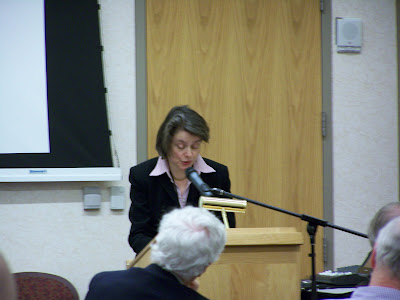
This past week, my friend Joyce and I decided to be nerds and attend the Philosophy and Liturgy conference at my (now) alma mater Calvin College. It was definitely more philosophical jargon than I'm used to, and the irony of a bunch of talking heads sitting around talking about how great embodiment was definitely wasn't lost on me. Anyway, one lecture I thought was absolutely brilliant (as well as understandable!) was Sarah Coakley's talk, "Beyond ‘Belief’: Liturgy and the Cognitive Apprehension of God." Here are my notes, even though they hardly begin to do justice to her paper.
Intro: 
-part of the reason secular Europe lacks faith is because of "untaught bodies," not just "untaught minds."
-liturgy in of itself conveys a particular type of knowledge/truth

1. Religious Experience: problems with using this as a framework for knowing God
-insists on direct/unmediated perception of God
-relies on sporadic, self-authenticating experiences
-interprets mystical experiences apart from wider asetic narratives
-God= "other" to be percieved, not means of all perception.

2. Insights from feminist epistemology
-questions "perception at a distance," such as the classic philosophical examples of percieving a chair in the middle of the room.
-insists that we can't ignore the significance of personal/communal interactions
-need to take identity of embodied knower into account
-primary relationships (such as a mother and infant) are a basis for knowing later on, and provide a basis for reflection on knowing God.-->"fundamental and ongoing knowledge by aquaintance." 

3. Liturgical knowledge of God

-litergy irreducibly conveys theoloical truth/intimacy with God.
-litergical practices are socially mediated, bodily enacted, and give cognitive access to pers
onal knowledge of God.
-Gregory of Nyssa: through liturgy, we train the physical senses and begin to sense as Christ senses. (the "spiritual senses" tradition, beginning with Origen)
-liturgical knowing=sensual acuity, affective longing
-engaging in liturgical practice causes us to assent to the basic beliefs of the Christian faith in different ways over time, the goal being "full integration of embodied selfhood into the life of Christ."
-liturgy engages us in trasformation toward an eschatological goal.
-eschatological moments where time stands still are moments where we remind ourselves corporately of where we are going.

I thought what she said made a lot of sense, especially the part about the problem with trying to percieve God as an "other" from a distance, and not as "the means of all perception," especially knowing what I know about psychology and human development.  When babies are born, they "know" their mother by her voice, even though they are not yet self-aware and cannot consciously understand who their mother is.  They become securely or insecurely attached based on whether or not their parents respond to them consistently. This forms a personality disposition that will stay with them throughout their entire lives, all before they can consciously apprehend who their parents are. I wonder if the writer of 1 Peter was subconsciously thinking about liturgy when he wrote, "Like newborn babies, crave pure spiritual milk, so that by it you may grow up in your salvation."

Monday, May 19

I did it!

College graduate...has a nice ring to it, don't you think?

Wednesday, May 14

I don't get art.

Can someone please explain why in heaven's name this painting sold for $33.6 million?

Friday, May 2

Ridiculousness Overheard

This same girl has managed to make my jaw drop two class periods in a row now:

Friday we're talking about the environment and its effect on health and the discussion moves to the ecological crisis and what we can do to. She turns around and says to me, "I don't even know why we're talking about this. God is going to destroy the earth anyway."

And today we were talking about the Reformed Worldview and how our vocation can be used in the kingdom of God:

"I don't know why we're learning this either. Advancing the kingdom of God? Come on! I mean, it's not like there's anything we can do. The world just keeps getting worse and worse and it's just heading towards total chaos..."

It was a great wake-up call to remember that people actually think like this. What depressing theology! I'm not for a "salvation by works" per se, but I still think that salvation takes work. I don't think that the new creation would be nearly as exciting if God hadn't let us take part in it. If we're made in his image to problem-solve, be creative, and glorify him with our talents, it only makes sense that he would give us some work to do, rather than tell us to hang tight until the world ends in a fiery mess.